Toronto's Celebrity Penthouses Sell for 40% More Than Comparable Units, Here's Why Buyers Pay the Premium
A penthouse on the 50th floor of the Ritz-Carlton sold in 2024 for $18.7 million. The unit directly below it, identical in square footage and finishes, closed eight months earlier at $13.4 million. Same building. Same view corridor. Same marble supplier. The difference was the seller's IMDB page.
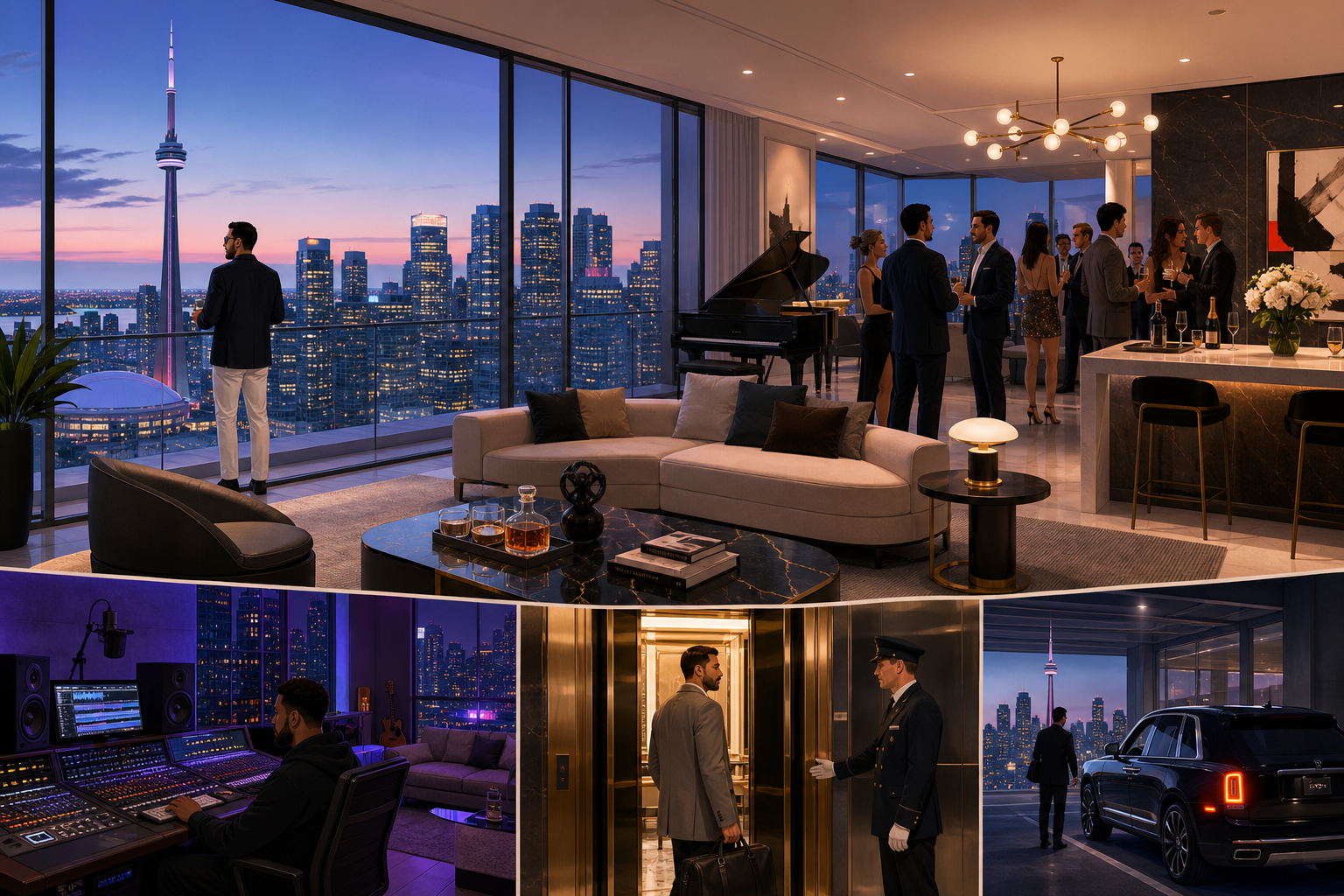
This is the Yorkville effect in numbers. When a property crosses the threshold from luxury commodity to owned-by-someone-famous, the math changes. The premium is real, measurable, and far larger than most brokers admit in public. Comparable sales data from the Toronto Regional Real Estate Board shows that units previously owned by recognizable entertainers command between 35% and 45% more than equivalent inventory in the same tower. The gap widens in buildings where hotel-style amenities, 24-hour concierge, private elevator vestibules, gated underground parking, allow A-list owners to move through the property without ever appearing in a lobby.
The Privacy Infrastructure Costs Real Money
A $15 million penthouse is table stakes in 2026 for Yorkville's upper tier. What separates a celebrity unit from a non-celebrity one is not the kitchen appliances or the terrace square footage. It's the architectural provisions for invisibility. Private elevator vestibules that open directly into the unit, not a shared hallway. Separate service entrances so deliveries and staff never overlap with resident traffic. Parking stalls positioned near dedicated exits, often with additional security bollards. These features cost developers real money to install. They also limit the pool of units that qualify.
The Four Seasons Private Residences and the Ritz-Carlton Residences dominate this tier because they were designed, from foundation up, to accommodate buyers who cannot walk through a lobby without stopping for photos. The buildings function as vertical hotels with permanent occupants. That infrastructure carries a premium even before a famous name attaches to a specific unit. When Drake or a TIFF regular buys in, the premium compounds.
The Networking Asset No One Lists in the MLS
Here's what the listing never says outright: these penthouses are business venues. A $20 million unit with 5,000 square feet and a wrap terrace isn't just a place to sleep between shoots. It's where a director hosts a private dinner for financiers during TIFF. Where a music producer holds listening sessions that turn into handshake deals. Where a production company executive throws a party that gets written up in trade press and justifies the mortgage as a line item under "business development."
The carrying costs on a trophy penthouse, property taxes, condo fees, insurance, can exceed $30,000 a month. For a hedge fund manager, that's a lifestyle expense. For someone in entertainment, it's overhead with a return. The unit itself becomes a signal, a backdrop, a venue. The buyer isn't paying for granite. They're paying for a space that does double duty as a private clubhouse in a city where production budgets run into nine figures and relationships close deals.
The Celebrity Discount Exists Too
Fame cuts both ways. A penthouse that's been photographed extensively for Architectural Digest or splashed across social media can actually be harder to sell. Buyers in the $20 million range often prioritize extreme privacy and may avoid a property with a public profile. Units previously owned by legacy film stars, household names from the 1990s and early 2000s, tend to hold value better than those tied to modern influencers, whose fame cycles are shorter and whose follower counts don't always translate into lasting cultural weight.
The ultra-luxury market also moves slowly. Units above $10 million routinely sit for 12 to 24 months regardless of the owner's name. A famous seller can generate initial buzz, but if the unit is overpriced or the timing is wrong, the listing goes stale. The pedigree premium evaporates if the property becomes known as "that penthouse that won't sell."
What remains is the structural fact: Toronto is Hollywood North, and the concentration of production work means talent needs places to live between shoots. The units that serve that function best, private, secure, close to Yorkville's infrastructure, are a distinct asset class. The 40% premium reflects that reality. It's not star worship. It's supply and scarcity.



A penthouse on the 50th floor of the Ritz-Carlton sold in 2024 for $18.7 million. The unit directly below it, identical in square footage and finishes, closed eight months earlier at $13.4 million. Same building. Same view corridor. Same marble supplier. The difference was the seller's IMDB page.
This is the Yorkville effect in numbers. When a property crosses the threshold from luxury commodity to owned-by-someone-famous, the math changes. The premium is real, measurable, and far larger than most brokers admit in public. Comparable sales data from the Toronto Regional Real Estate Board shows that units previously owned by recognizable entertainers command between 35% and 45% more than equivalent inventory in the same tower. The gap widens in buildings where hotel-style amenities, 24-hour concierge, private elevator vestibules, gated underground parking, allow A-list owners to move through the property without ever appearing in a lobby.
The Privacy Infrastructure Costs Real Money
A $15 million penthouse is table stakes in 2026 for Yorkville's upper tier. What separates a celebrity unit from a non-celebrity one is not the kitchen appliances or the terrace square footage. It's the architectural provisions for invisibility. Private elevator vestibules that open directly into the unit, not a shared hallway. Separate service entrances so deliveries and staff never overlap with resident traffic. Parking stalls positioned near dedicated exits, often with additional security bollards. These features cost developers real money to install. They also limit the pool of units that qualify.
The Four Seasons Private Residences and the Ritz-Carlton Residences dominate this tier because they were designed, from foundation up, to accommodate buyers who cannot walk through a lobby without stopping for photos. The buildings function as vertical hotels with permanent occupants. That infrastructure carries a premium even before a famous name attaches to a specific unit. When Drake or a TIFF regular buys in, the premium compounds.
The Networking Asset No One Lists in the MLS
Here's what the listing never says outright: these penthouses are business venues. A $20 million unit with 5,000 square feet and a wrap terrace isn't just a place to sleep between shoots. It's where a director hosts a private dinner for financiers during TIFF. Where a music producer holds listening sessions that turn into handshake deals. Where a production company executive throws a party that gets written up in trade press and justifies the mortgage as a line item under "business development."
The carrying costs on a trophy penthouse, property taxes, condo fees, insurance, can exceed $30,000 a month. For a hedge fund manager, that's a lifestyle expense. For someone in entertainment, it's overhead with a return. The unit itself becomes a signal, a backdrop, a venue. The buyer isn't paying for granite. They're paying for a space that does double duty as a private clubhouse in a city where production budgets run into nine figures and relationships close deals.
The Celebrity Discount Exists Too
Fame cuts both ways. A penthouse that's been photographed extensively for Architectural Digest or splashed across social media can actually be harder to sell. Buyers in the $20 million range often prioritize extreme privacy and may avoid a property with a public profile. Units previously owned by legacy film stars, household names from the 1990s and early 2000s, tend to hold value better than those tied to modern influencers, whose fame cycles are shorter and whose follower counts don't always translate into lasting cultural weight.
The ultra-luxury market also moves slowly. Units above $10 million routinely sit for 12 to 24 months regardless of the owner's name. A famous seller can generate initial buzz, but if the unit is overpriced or the timing is wrong, the listing goes stale. The pedigree premium evaporates if the property becomes known as "that penthouse that won't sell."
What remains is the structural fact: Toronto is Hollywood North, and the concentration of production work means talent needs places to live between shoots. The units that serve that function best, private, secure, close to Yorkville's infrastructure, are a distinct asset class. The 40% premium reflects that reality. It's not star worship. It's supply and scarcity.
Read Next
MCAN's 19% earnings jump proves mortgage impairments aren't the risk signal investors think they are
Toronto Buyers Can Stop Writing Love Letters, The Market Already Did the Work
25 States Sue Trump Over Tariffs, Claiming Presidential Overreach on Import Taxes
Carney's Alberta housing pitch meets canola fields and separatist flags