RBC Poll: Most Canadians Think There's No Perfect Time to Buy a Home
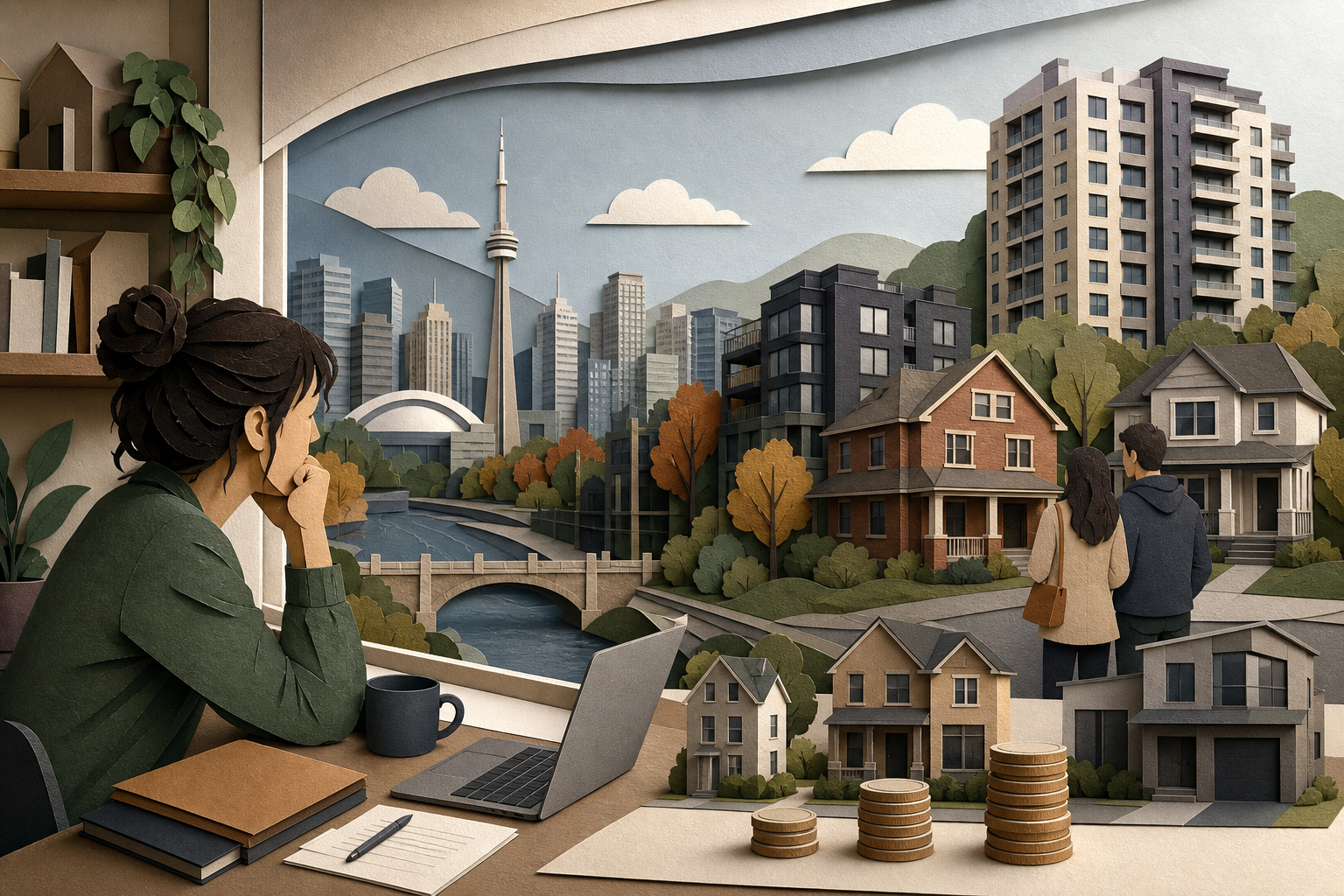
A 32-year-old data analyst in Kitchener sat on a pre-approval for nine months before letting it expire. She didn't buy. She also didn't stop looking. When RBC polled Canadians about the housing market this year, that paralysis showed up in the aggregate: most respondents said there is no perfect time to buy a home. Not now. Not later. Not really ever.
That's not indecision. That's resignation dressed as strategy.
The poll lands in the middle of the longest affordability squeeze in Canadian housing history. The national average home price sits around $700,000, down from its February 2022 peak but still wildly detached from wage growth. The Bank of Canada has cut rates three times since June 2024, bringing the policy rate to 3.75%, but fixed mortgage rates remain stuck above 5% for most borrowers. A first-time buyer in the Greater Toronto Area needs roughly $140,000 for a 20% down payment on a typical condo. Saving that amount on a median household income of $87,000 takes years, and the target moves while you save.
The calculation broke
The framework Canadians used to use for timing the housing market was interest-rate arbitrage. Rates high? Wait. Rates low? Buy. The logic worked when price growth was predictable and mortgage terms reflected the policy rate within a few months. Neither condition holds anymore.
Fixed rates peaked near 6.5% in mid-2023 and have since drifted down to the low-5% range, but they haven't followed the Bank of Canada's recent cuts with anything close to symmetry. The spread between the policy rate and what a borrower actually pays has widened. Meanwhile, home prices in major markets have stabilized rather than crashed, which means the anticipated price drop that was supposed to reward patience never materialized. Waiting didn't get cheaper. It just got longer.
So buyers are stuck evaluating two bad options: pay today's elevated rates on today's elevated prices, or wait for cuts that may or may not arrive while prices drift sideways or tick back up. The poll result makes sense. There is no good answer because neither path is obviously better.
What the paralysis costs
The individual impact of waiting is foregone equity and deferred household formation. The couple that postpones buying a home to save another $30,000 doesn't get that time back. They rent longer, move less, delay renovations, put off having kids or having more kids. All of that is rational when prices are falling. None of it makes sense when prices flatten and rates refuse to cooperate.
The systemic cost is worse. When a critical mass of potential buyers sits on the sidelines, transaction volume collapses. Lower volume means fewer listings, which means less price discovery, which means the market stops clearing efficiently. Sellers hold because they don't see competitive bids. Buyers hold because they don't see sellers capitulating. The whole mechanism stalls.
Canadian home sales in 2024 ran roughly 30% below the ten-year average. That's not a market adjusting. That's a market frozen.
The RBC poll didn't ask whether Canadians think housing will become affordable again. It asked whether there's a perfect time to buy. The answer, no, reflects something bleaker than pessimism. It reflects the view that the decision has stopped being about timing and started being about endurance. You buy when you can't wait anymore, not when the numbers work.



A 32-year-old data analyst in Kitchener sat on a pre-approval for nine months before letting it expire. She didn't buy. She also didn't stop looking. When RBC polled Canadians about the housing market this year, that paralysis showed up in the aggregate: most respondents said there is no perfect time to buy a home. Not now. Not later. Not really ever.
That's not indecision. That's resignation dressed as strategy.
The poll lands in the middle of the longest affordability squeeze in Canadian housing history. The national average home price sits around $700,000, down from its February 2022 peak but still wildly detached from wage growth. The Bank of Canada has cut rates three times since June 2024, bringing the policy rate to 3.75%, but fixed mortgage rates remain stuck above 5% for most borrowers. A first-time buyer in the Greater Toronto Area needs roughly $140,000 for a 20% down payment on a typical condo. Saving that amount on a median household income of $87,000 takes years, and the target moves while you save.
The calculation broke
The framework Canadians used to use for timing the housing market was interest-rate arbitrage. Rates high? Wait. Rates low? Buy. The logic worked when price growth was predictable and mortgage terms reflected the policy rate within a few months. Neither condition holds anymore.
Fixed rates peaked near 6.5% in mid-2023 and have since drifted down to the low-5% range, but they haven't followed the Bank of Canada's recent cuts with anything close to symmetry. The spread between the policy rate and what a borrower actually pays has widened. Meanwhile, home prices in major markets have stabilized rather than crashed, which means the anticipated price drop that was supposed to reward patience never materialized. Waiting didn't get cheaper. It just got longer.
So buyers are stuck evaluating two bad options: pay today's elevated rates on today's elevated prices, or wait for cuts that may or may not arrive while prices drift sideways or tick back up. The poll result makes sense. There is no good answer because neither path is obviously better.
What the paralysis costs
The individual impact of waiting is foregone equity and deferred household formation. The couple that postpones buying a home to save another $30,000 doesn't get that time back. They rent longer, move less, delay renovations, put off having kids or having more kids. All of that is rational when prices are falling. None of it makes sense when prices flatten and rates refuse to cooperate.
The systemic cost is worse. When a critical mass of potential buyers sits on the sidelines, transaction volume collapses. Lower volume means fewer listings, which means less price discovery, which means the market stops clearing efficiently. Sellers hold because they don't see competitive bids. Buyers hold because they don't see sellers capitulating. The whole mechanism stalls.
Canadian home sales in 2024 ran roughly 30% below the ten-year average. That's not a market adjusting. That's a market frozen.
The RBC poll didn't ask whether Canadians think housing will become affordable again. It asked whether there's a perfect time to buy. The answer, no, reflects something bleaker than pessimism. It reflects the view that the decision has stopped being about timing and started being about endurance. You buy when you can't wait anymore, not when the numbers work.
Read Next
How to Stack the FHSA, RRSP Home Buyers' Plan, and Land Transfer Rebate Without Leaving $15,000 on the Table
The Kitchener Household That Paid $8,400 More by Choosing the Wrong Equity Tool
Alternative Lenders Push Back on Ottawa's Plan to Regulate Them Like Private Mortgage Funds
Why Most Canadians Wait Too Long to Plan Their Own Death