Michaels Turned Rival Bankruptcies Into a Market Takeover
Apollo Global Management paid $5 billion for Michaels in 2021, the year Joann and A.C. Moore both filed for bankruptcy protection. That timing turned out to matter more than anyone expected.
The arts and crafts retail sector looked fragile. Tariff threats from China were still live. Amazon had been eating margin for years. The private equity playbook usually involves cost cuts and operational fixes, not market share grabs from distressed competitors. But when your two largest rivals enter restructuring within months of each other, the playbook changes.
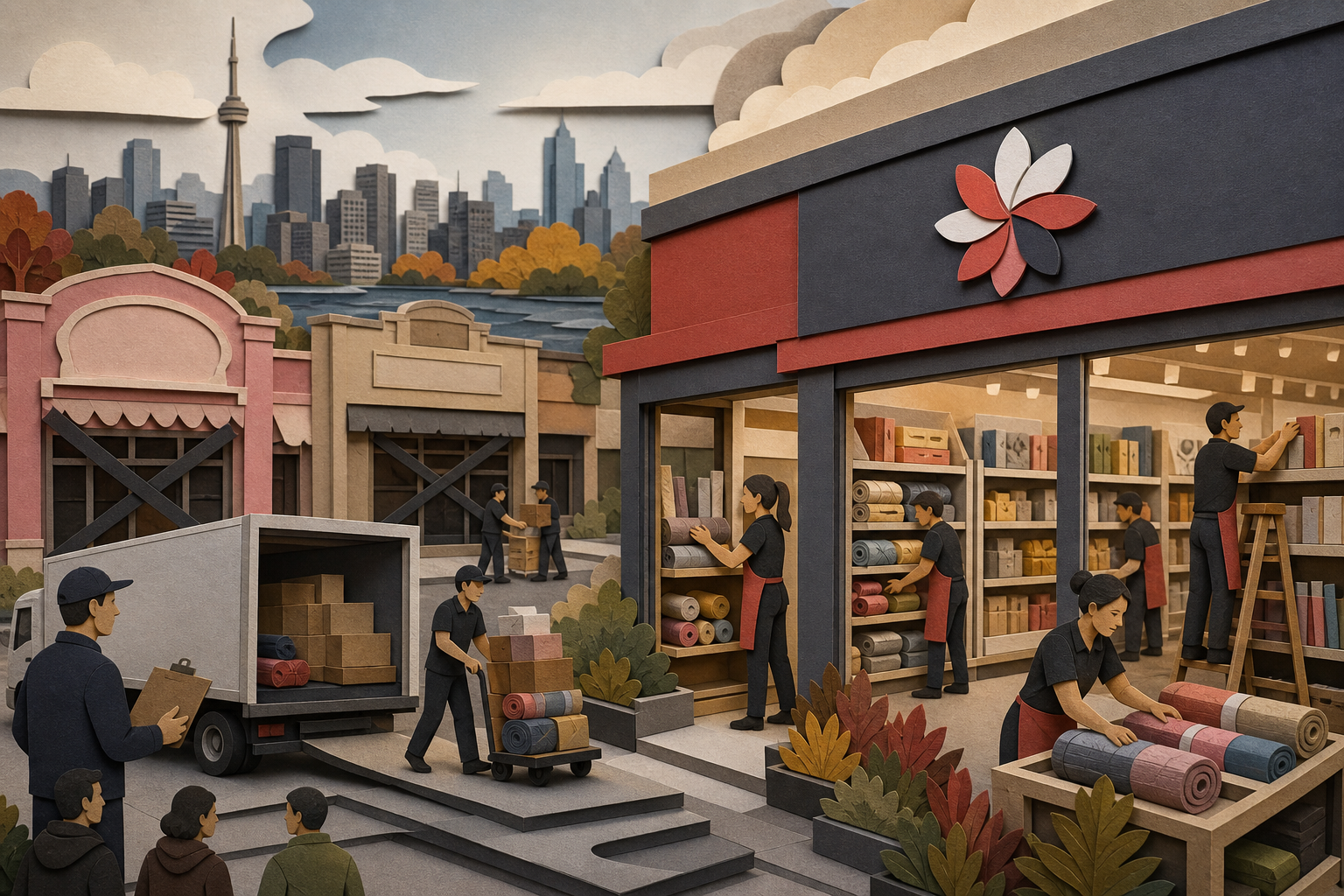
Michaels didn't wait for Joann and A.C. Moore to finish liquidating inventory. They moved inventory into stores near shuttered competitor locations before the lease signs came down. In markets where a Joann closed, Michaels expanded their yarn and fabric sections within 60 days. When A.C. Moore announced store closures in the Mid-Atlantic, Michaels pushed loyalty program promotions directly into those zip codes.
The risk was obvious. Taking on more inventory in categories your rivals just proved unprofitable requires either better margins or more foot traffic. Michaels bet on traffic. They were right. Former Joann customers didn't switch to online craft suppliers at the rate the market assumed they would. They switched to the next-closest physical store, which in most suburban markets was a Michaels.
Why the physical store still mattered
Craft retail has a specific friction that e-commerce hasn't solved: material touch. You cannot assess fabric weight or paint finish consistency from a product photo. A quilter buying cotton wants to see the weave. A painter mixing acrylics wants to compare viscosity across brands before committing to a six-tube set. Michaels understood this. Their rivals, trying to cut their way to profitability, had been reducing in-store product range to focus on online fulfillment. Michaels went the other direction and stocked deeper.
The tariff threat that spooked the sector in 2019 and 2020 never fully materialized at the levels initially projected, but it forced procurement discipline. Michaels renegotiated supplier terms while Joann and A.C. Moore were in distress mode and couldn't. By mid-2022, Michaels had locked in pricing on key SKUs that their restructuring competitors were paying 12% more for. When your rival is trying to emerge from bankruptcy with higher input costs and you're acquiring their customer base at the same time, the compounding effect is severe.
Apollo's role here was less about operational brilliance and more about having patient capital during a narrow window when competitors didn't. Private equity gets criticized for loading portfolio companies with debt and flipping them. In this case, the debt load mattered less than the fact that Michaels didn't have to show quarterly earnings growth to public markets while absorbing a customer migration. They could invest in inventory depth and targeted local marketing without justifying it on a 90-day cycle.
What the market missed
The conventional read on Michaels under Apollo was that it would be a cost-extraction play in a declining category. That read underestimated two things: how much residual demand existed for in-person craft retail when competitors exited, and how fast a competent operator could capture it when the capital structure allowed them to move without quarterly performance pressure.
Michaels didn't invent a new business model. They bought market share from bankruptcies at exactly the moment those bankruptcies made the remaining share more valuable. That's not a turnaround. It's just well-timed consolidation that looked like a comeback because the baseline was low enough.



Apollo Global Management paid $5 billion for Michaels in 2021, the year Joann and A.C. Moore both filed for bankruptcy protection. That timing turned out to matter more than anyone expected.
The arts and crafts retail sector looked fragile. Tariff threats from China were still live. Amazon had been eating margin for years. The private equity playbook usually involves cost cuts and operational fixes, not market share grabs from distressed competitors. But when your two largest rivals enter restructuring within months of each other, the playbook changes.
Michaels didn't wait for Joann and A.C. Moore to finish liquidating inventory. They moved inventory into stores near shuttered competitor locations before the lease signs came down. In markets where a Joann closed, Michaels expanded their yarn and fabric sections within 60 days. When A.C. Moore announced store closures in the Mid-Atlantic, Michaels pushed loyalty program promotions directly into those zip codes.
The risk was obvious. Taking on more inventory in categories your rivals just proved unprofitable requires either better margins or more foot traffic. Michaels bet on traffic. They were right. Former Joann customers didn't switch to online craft suppliers at the rate the market assumed they would. They switched to the next-closest physical store, which in most suburban markets was a Michaels.
Why the physical store still mattered
Craft retail has a specific friction that e-commerce hasn't solved: material touch. You cannot assess fabric weight or paint finish consistency from a product photo. A quilter buying cotton wants to see the weave. A painter mixing acrylics wants to compare viscosity across brands before committing to a six-tube set. Michaels understood this. Their rivals, trying to cut their way to profitability, had been reducing in-store product range to focus on online fulfillment. Michaels went the other direction and stocked deeper.
The tariff threat that spooked the sector in 2019 and 2020 never fully materialized at the levels initially projected, but it forced procurement discipline. Michaels renegotiated supplier terms while Joann and A.C. Moore were in distress mode and couldn't. By mid-2022, Michaels had locked in pricing on key SKUs that their restructuring competitors were paying 12% more for. When your rival is trying to emerge from bankruptcy with higher input costs and you're acquiring their customer base at the same time, the compounding effect is severe.
Apollo's role here was less about operational brilliance and more about having patient capital during a narrow window when competitors didn't. Private equity gets criticized for loading portfolio companies with debt and flipping them. In this case, the debt load mattered less than the fact that Michaels didn't have to show quarterly earnings growth to public markets while absorbing a customer migration. They could invest in inventory depth and targeted local marketing without justifying it on a 90-day cycle.
What the market missed
The conventional read on Michaels under Apollo was that it would be a cost-extraction play in a declining category. That read underestimated two things: how much residual demand existed for in-person craft retail when competitors exited, and how fast a competent operator could capture it when the capital structure allowed them to move without quarterly performance pressure.
Michaels didn't invent a new business model. They bought market share from bankruptcies at exactly the moment those bankruptcies made the remaining share more valuable. That's not a turnaround. It's just well-timed consolidation that looked like a comeback because the baseline was low enough.
Read Next
DLC Now Controls Both Filogix and Velocity: Why That Should Worry Every Independent Broker
MCAN's 19% earnings jump proves mortgage impairments aren't the risk signal investors think they are
Toronto Buyers Can Stop Writing Love Letters, The Market Already Did the Work
25 States Sue Trump Over Tariffs, Claiming Presidential Overreach on Import Taxes