Loblaw's EQB Play Isn't About Banking, It's About Turning Grocery Data Into Financial Products
EQB Inc. shares jumped 9% in a single session after Loblaw disclosed it plans to push its ownership stake to nearly 25%. That's not the kind of move you make for dividend yield.
The reaction assumes this is about portfolio returns, a big retailer buying into a solid digital bank. It's not. Loblaw already runs the country's largest loyalty program. It knows what 18 million Canadians buy every week, how often they visit, and which aisles they avoid. What it doesn't own is the mortgage origination, savings behavior, and credit profile sitting on the other side of those transactions. EQB has exactly that. The overlap is the product.
The infrastructure was already there
Equitable Bank provides the back-end deposit accounts for PC Financial. That partnership has been running for years. But providing infrastructure and owning a quarter of the entity that generates the data are different levels of control. At 25%, Loblaw isn't just a client anymore. It's a stakeholder with boardroom influence and line-of-sight into EQB's product roadmap and origination pipeline.
The Bank Act draws a hard line at 10% ownership for commercial entities. Anything beyond that triggers federal approval and oversight from the Office of the Superintendent of Financial Institutions. Loblaw crossed that threshold years ago. Pushing to 25% requires deliberate clearance, which means this isn't opportunistic. It's structural.
What the closed loop actually buys you
Combine Loblaw's purchase history with EQB's mortgage and savings data and you've built a 360-degree financial profile. Not an approximation. The actual behavior. You know who stretched to buy the house, who's drawing down savings to cover groceries, and who just started buying organic after a refinance. That's not consumer insight. That's underwriting intelligence.
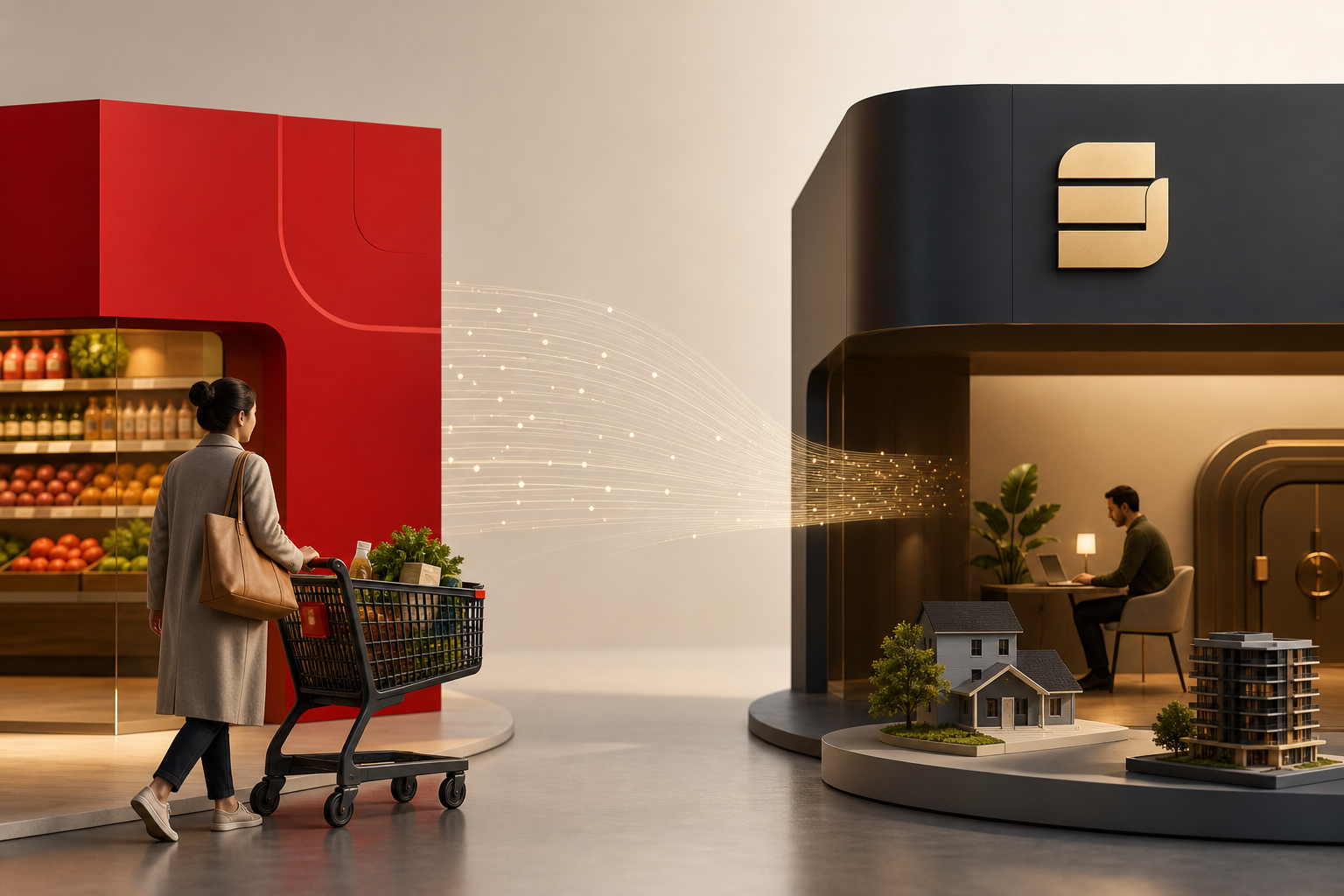
The product isn't a better credit card. It's risk-adjusted financing at the point of sale, dynamically priced mortgage products for customers already in the PC ecosystem, and savings vehicles that trigger based on spending patterns Loblaw can see in real time. The bank becomes the distributor. The grocery store becomes the origination channel. The loyalty program becomes the acquisition and retention loop.
EQB has spent a decade positioning itself as Canada's Challenger Bank. It bought Concentra Bank in 2022, carved out the alt-A mortgage market, and built a depositor base that skews digital-first. That model works when you're lean and hungry. It works better when the country's largest retailer owns a quarter of you and can drive volume through 2,500+ physical locations without paying for customer acquisition.
Where the friction appears
The immediate question is whether OSFI allows this much integration between a grocer and a Schedule I bank. The rule exists to prevent commercial interests from influencing credit decisions. When your largest shareholder is also your largest distribution partner and has visibility into customer cash flow before they even apply for a mortgage, that line gets harder to draw.
There's also concentration risk in the other direction. EQB's brand is now structurally tied to Loblaw's. If the grocer faces reputational blowback, price-fixing allegations, labour disputes, data breaches, it doesn't stay contained. A bank that gets 25% of its strategic direction from a partner with public-facing exposure inherits that volatility.
This isn't a passive investment. Passive stakes don't move share prices 9% in a session. The market is pricing in operational integration, not dividend flow. Loblaw isn't buying EQB to get into banking. It's buying EQB to turn a closed-loop loyalty program into a closed-loop financial system. The question isn't whether that's valuable. The question is whether Canadian regulators let it run.



EQB Inc. shares jumped 9% in a single session after Loblaw disclosed it plans to push its ownership stake to nearly 25%. That's not the kind of move you make for dividend yield.
The reaction assumes this is about portfolio returns, a big retailer buying into a solid digital bank. It's not. Loblaw already runs the country's largest loyalty program. It knows what 18 million Canadians buy every week, how often they visit, and which aisles they avoid. What it doesn't own is the mortgage origination, savings behavior, and credit profile sitting on the other side of those transactions. EQB has exactly that. The overlap is the product.
The infrastructure was already there
Equitable Bank provides the back-end deposit accounts for PC Financial. That partnership has been running for years. But providing infrastructure and owning a quarter of the entity that generates the data are different levels of control. At 25%, Loblaw isn't just a client anymore. It's a stakeholder with boardroom influence and line-of-sight into EQB's product roadmap and origination pipeline.
The Bank Act draws a hard line at 10% ownership for commercial entities. Anything beyond that triggers federal approval and oversight from the Office of the Superintendent of Financial Institutions. Loblaw crossed that threshold years ago. Pushing to 25% requires deliberate clearance, which means this isn't opportunistic. It's structural.
What the closed loop actually buys you
Combine Loblaw's purchase history with EQB's mortgage and savings data and you've built a 360-degree financial profile. Not an approximation. The actual behavior. You know who stretched to buy the house, who's drawing down savings to cover groceries, and who just started buying organic after a refinance. That's not consumer insight. That's underwriting intelligence.
The product isn't a better credit card. It's risk-adjusted financing at the point of sale, dynamically priced mortgage products for customers already in the PC ecosystem, and savings vehicles that trigger based on spending patterns Loblaw can see in real time. The bank becomes the distributor. The grocery store becomes the origination channel. The loyalty program becomes the acquisition and retention loop.
EQB has spent a decade positioning itself as Canada's Challenger Bank. It bought Concentra Bank in 2022, carved out the alt-A mortgage market, and built a depositor base that skews digital-first. That model works when you're lean and hungry. It works better when the country's largest retailer owns a quarter of you and can drive volume through 2,500+ physical locations without paying for customer acquisition.
Where the friction appears
The immediate question is whether OSFI allows this much integration between a grocer and a Schedule I bank. The rule exists to prevent commercial interests from influencing credit decisions. When your largest shareholder is also your largest distribution partner and has visibility into customer cash flow before they even apply for a mortgage, that line gets harder to draw.
There's also concentration risk in the other direction. EQB's brand is now structurally tied to Loblaw's. If the grocer faces reputational blowback, price-fixing allegations, labour disputes, data breaches, it doesn't stay contained. A bank that gets 25% of its strategic direction from a partner with public-facing exposure inherits that volatility.
This isn't a passive investment. Passive stakes don't move share prices 9% in a session. The market is pricing in operational integration, not dividend flow. Loblaw isn't buying EQB to get into banking. It's buying EQB to turn a closed-loop loyalty program into a closed-loop financial system. The question isn't whether that's valuable. The question is whether Canadian regulators let it run.
Read Next
DLC Now Controls Both Filogix and Velocity: Why That Should Worry Every Independent Broker
MCAN's 19% earnings jump proves mortgage impairments aren't the risk signal investors think they are
Toronto Buyers Can Stop Writing Love Letters, The Market Already Did the Work
25 States Sue Trump Over Tariffs, Claiming Presidential Overreach on Import Taxes