How a $40 water sensor cut this homeowner's insurance bill by $180
The discount showed up on month six. The homeowner, a 52-year-old in Oakville, installed a Flo by Moen water sensor in his basement utility room in January. By July, his insurer, Aviva, had knocked $180 off his annual premium. The device cost $42 on sale at Home Depot.
Most people think smart home insurance discounts mean security systems or doorbell cameras. Water sensors outperform both. The Insurance Bureau of Canada reports water damage as the top driver of residential claims. A flooded basement runs $7,000 on average; bad ones hit $40,000. Insurers hate basements. A sensor that texts you when moisture hits the probe is worth real money to them.
What qualifies for the discount
Not every leak detector triggers a rate cut. The device must connect to Wi-Fi and send real-time alerts. The standalone battery units that just beep locally don't count. You need something that notifies you when you're not home. Insurers typically require the sensor to sit within ten feet of the water heater, sump pump, or washing machine, the three highest-risk failure points in a Canadian home.
Most major carriers now recognize these devices. Intact offers 5% off if you pair the sensor with their app. Desjardins runs 8% for customers who install a Flo system (sensor plus automatic shut-off valve). Belairdirect discounts 10% but only if the sensor has been active for six consecutive months with no connectivity gaps. The Oakville case hit the six-month threshold in June; the discount applied retroactively to January.
The higher-end systems, Phyn, Flo, LeakSmart, include whole-home shut-off valves. When the sensor detects a leak, the valve cuts water to the entire house. That setup can push discounts to 15% or even 20% because it prevents the total-loss scenario underwriters fear. A $400 valve plus $100 installation might save $240 annually on a $1,500 premium. Payback in two years.
The fine print nobody reads
The sensor only works if you act on the alert. Insurers increasingly write clauses that void coverage if the system was offline or if the homeowner ignored repeated warnings. One Toronto policyholder filed a $22,000 claim after a hot water tank ruptured. The adjuster pulled the app logs. The sensor had been offline for three weeks, dead battery. Claim denied.
You also need to register the device with your insurer within 30 days of installation to lock in the discount. Most companies require a photo of the sensor in place, the serial number, and proof of purchase. Miss that window and you're applying retroactively, which some carriers won't process. The Oakville homeowner emailed his insurer the receipt and a photo the same day he installed it. That's why the discount hit month six instead of getting pushed to renewal.
False alarms are common. Humidity spikes in summer can trip cheaper sensors. The policyholder gets an alert, checks, finds nothing, and eventually stops paying attention. Then the real leak happens and they're in Banff for a week. Smart sensors work best paired with a neighbor who has your door code or a property manager who can respond within two hours.
Where the math breaks
If you're a renter, this doesn't apply. Tenant insurance policies don't discount for building-level improvements. If you live in a condo where the building's master policy covers water damage to units, your personal policy won't adjust either. The discount applies to standalone homes and townhouses where you own the structure.
The savings also plateau. A sensor plus a shut-off valve maxes most discounts. Adding a second sensor in the laundry room won't double your savings. Insurers calculate the discount based on the reduction in expected claim severity, not the number of devices installed.
The Oakville homeowner now tracks $180 a year in savings against a $42 upfront cost. He replaced the sensor battery in December, $8 for a lithium coin cell. The net return in year one was $130. Year two will be $172. The valve's still on his list.


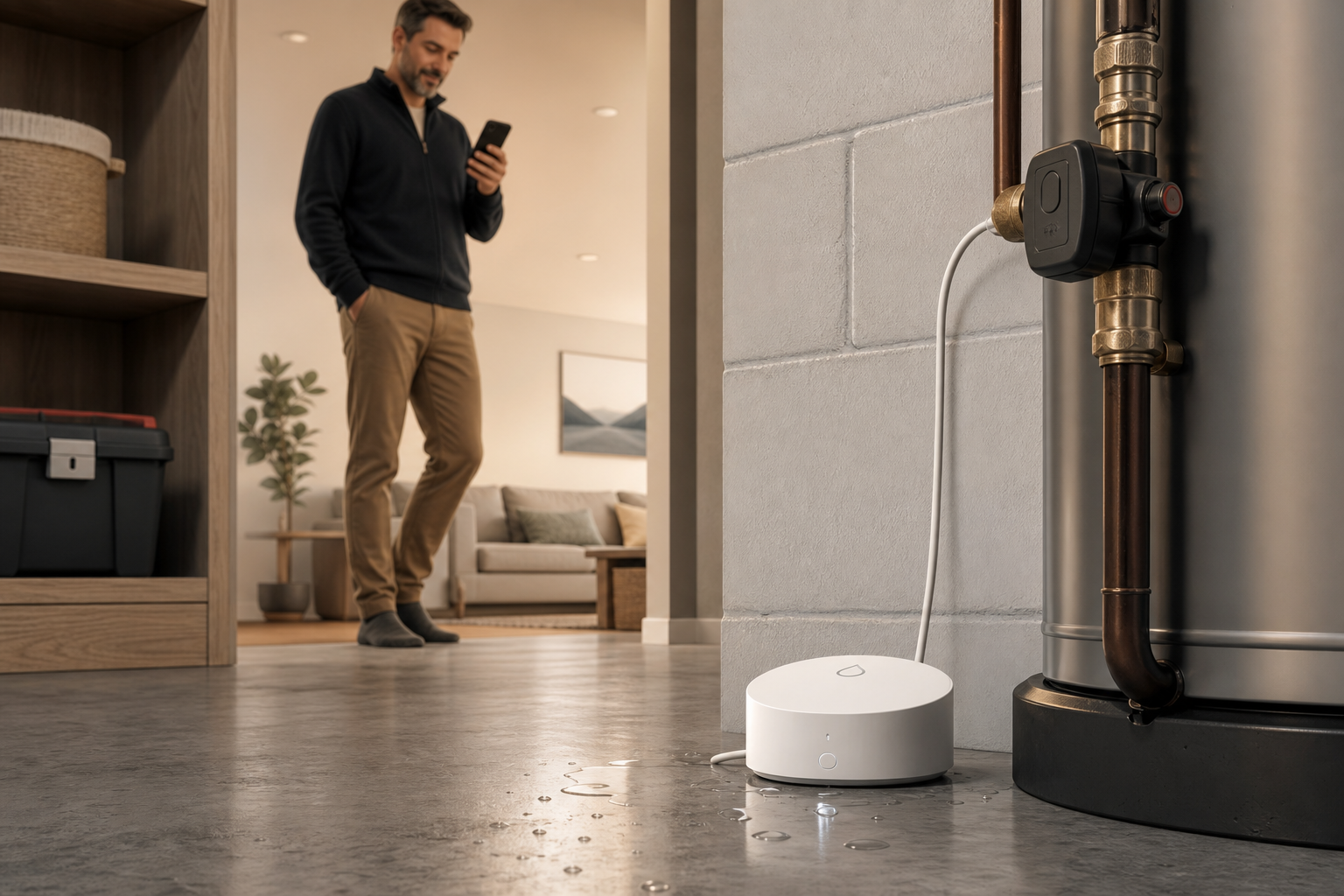

The discount showed up on month six. The homeowner, a 52-year-old in Oakville, installed a Flo by Moen water sensor in his basement utility room in January. By July, his insurer, Aviva, had knocked $180 off his annual premium. The device cost $42 on sale at Home Depot.
Most people think smart home insurance discounts mean security systems or doorbell cameras. Water sensors outperform both. The Insurance Bureau of Canada reports water damage as the top driver of residential claims. A flooded basement runs $7,000 on average; bad ones hit $40,000. Insurers hate basements. A sensor that texts you when moisture hits the probe is worth real money to them.
What qualifies for the discount
Not every leak detector triggers a rate cut. The device must connect to Wi-Fi and send real-time alerts. The standalone battery units that just beep locally don't count. You need something that notifies you when you're not home. Insurers typically require the sensor to sit within ten feet of the water heater, sump pump, or washing machine, the three highest-risk failure points in a Canadian home.
Most major carriers now recognize these devices. Intact offers 5% off if you pair the sensor with their app. Desjardins runs 8% for customers who install a Flo system (sensor plus automatic shut-off valve). Belairdirect discounts 10% but only if the sensor has been active for six consecutive months with no connectivity gaps. The Oakville case hit the six-month threshold in June; the discount applied retroactively to January.
The higher-end systems, Phyn, Flo, LeakSmart, include whole-home shut-off valves. When the sensor detects a leak, the valve cuts water to the entire house. That setup can push discounts to 15% or even 20% because it prevents the total-loss scenario underwriters fear. A $400 valve plus $100 installation might save $240 annually on a $1,500 premium. Payback in two years.
The fine print nobody reads
The sensor only works if you act on the alert. Insurers increasingly write clauses that void coverage if the system was offline or if the homeowner ignored repeated warnings. One Toronto policyholder filed a $22,000 claim after a hot water tank ruptured. The adjuster pulled the app logs. The sensor had been offline for three weeks, dead battery. Claim denied.
You also need to register the device with your insurer within 30 days of installation to lock in the discount. Most companies require a photo of the sensor in place, the serial number, and proof of purchase. Miss that window and you're applying retroactively, which some carriers won't process. The Oakville homeowner emailed his insurer the receipt and a photo the same day he installed it. That's why the discount hit month six instead of getting pushed to renewal.
False alarms are common. Humidity spikes in summer can trip cheaper sensors. The policyholder gets an alert, checks, finds nothing, and eventually stops paying attention. Then the real leak happens and they're in Banff for a week. Smart sensors work best paired with a neighbor who has your door code or a property manager who can respond within two hours.
Where the math breaks
If you're a renter, this doesn't apply. Tenant insurance policies don't discount for building-level improvements. If you live in a condo where the building's master policy covers water damage to units, your personal policy won't adjust either. The discount applies to standalone homes and townhouses where you own the structure.
The savings also plateau. A sensor plus a shut-off valve maxes most discounts. Adding a second sensor in the laundry room won't double your savings. Insurers calculate the discount based on the reduction in expected claim severity, not the number of devices installed.
The Oakville homeowner now tracks $180 a year in savings against a $42 upfront cost. He replaced the sensor battery in December, $8 for a lithium coin cell. The net return in year one was $130. Year two will be $172. The valve's still on his list.
Read Next
DLC Now Controls Both Filogix and Velocity: Why That Should Worry Every Independent Broker
MCAN's 19% earnings jump proves mortgage impairments aren't the risk signal investors think they are
Toronto Buyers Can Stop Writing Love Letters, The Market Already Did the Work
25 States Sue Trump Over Tariffs, Claiming Presidential Overreach on Import Taxes