Greater Sudbury, Timmins, and Thunder Bay: Why Mining Investment Is Remaking Northern Ontario's Housing Markets
Vale's announcement last fall that it would pump $2.8 billion into its Sudbury operations over the next decade caught most southern Ontario observers off guard. To residents of the North, it was confirmation of what had been visible for months: mining investment was reshaping not just the labour market, but the entire regional housing equation.
The dynamic driving this shift is structural, not cyclical. Global demand for nickel, lithium, and cobalt, metals critical to EV battery production, has turned Northern Ontario's mineral deposits into a strategic asset. The Ring of Fire region alone is projected to require over 15,000 additional workers over the next decade, according to the Mining Industry Human Resources Council. Those workers need places to live, and the housing stock in mining-dependent cities has not kept pace.
The Affordability Spread That Actually Matters
Greater Sudbury's average home price sits around $450,000 as of early 2026. Thunder Bay is slightly lower. Timmins hovers in the low $400,000s. For context, a detached home in Brampton now exceeds $1.2 million. The spread matters less because of the absolute numbers and more because of what it enables: equity-rich buyers relocating from the Greater Toronto Area can purchase homes outright or take on minimal leverage, a financial position that was structurally unavailable to them in the South.
This is not speculative migration. These are skilled tradespeople, engineers, and remote workers who have made a permanent move. The difference shows up in rental vacancy rates. Timmins recorded a sub-2% vacancy rate in 2025, one of the tightest rental markets in the province. When vacancy drops that low, rental yields for investors climb into double digits, a return profile unheard of in Ottawa or London.
Where the Supply Constraints Bind
The bottleneck is not land. Northern Ontario has geography in abundance. The constraint is modern, multi-family housing stock near employment centers. Sudbury and Thunder Bay have both seen double-digit year-over-year increases in housing starts, but developers face a basic arithmetic problem: construction costs in the North run 20-30% higher than in the South due to material transport and a localized shortage of specialized contractors.
This creates a paradox. Demand is high. Prices remain comparatively low. But new supply is slow to respond because the economics of building a four-storey apartment in Timmins are fundamentally worse than building the same structure in Kitchener, even though the rental yield in Timmins is higher.
The Ontario government's Building Faster Fund has started targeting Northern municipalities that meet housing targets, an implicit recognition that regional growth can no longer be tethered exclusively to the Golden Horseshoe. Sudbury received $4.1 million in the most recent allocation. Whether that kind of support accelerates supply meaningfully remains an open question.
The Commodity Risk Nobody Wants to Name
The single largest threat to this story is the one baked into every resource-dependent market: a sustained drop in global commodity prices. If nickel or copper values fall sharply and remain depressed, the mines that are driving demand will lay off workers, not hire them. Northern real estate markets have historically been more sensitive to mortgage rate changes than southern markets because the buyer pool skews younger and more leveraged. A downturn would hit harder and faster than it would in Toronto, where foreign capital and multi-generational wealth provide a cushion.
Sault Ste. Marie offers a partial hedge against this. Algoma Steel's transition to a green steel production model using electric arc furnaces has created a more stable employment base that is less directly tied to extraction cycles. But Sault is the exception. Most of the growth in the North remains tied to holes in the ground and what comes out of them.
For now, the investment is real and the housing pressure is real. Whether that pressure translates into sustained price appreciation or simply a temporary tightening depends on factors largely outside the control of anyone living in Northern Ontario.


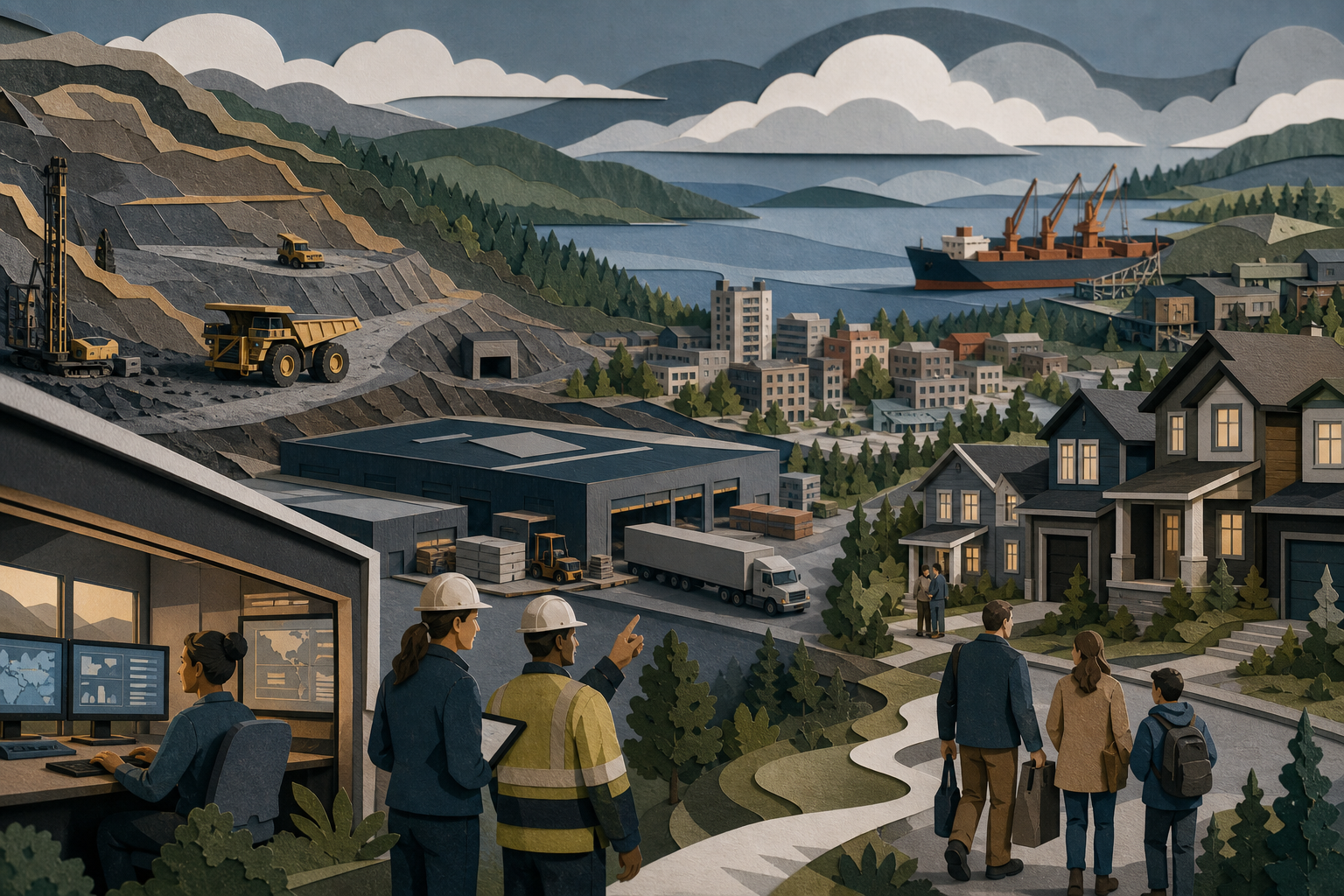

Vale's announcement last fall that it would pump $2.8 billion into its Sudbury operations over the next decade caught most southern Ontario observers off guard. To residents of the North, it was confirmation of what had been visible for months: mining investment was reshaping not just the labour market, but the entire regional housing equation.
The dynamic driving this shift is structural, not cyclical. Global demand for nickel, lithium, and cobalt, metals critical to EV battery production, has turned Northern Ontario's mineral deposits into a strategic asset. The Ring of Fire region alone is projected to require over 15,000 additional workers over the next decade, according to the Mining Industry Human Resources Council. Those workers need places to live, and the housing stock in mining-dependent cities has not kept pace.
The Affordability Spread That Actually Matters
Greater Sudbury's average home price sits around $450,000 as of early 2026. Thunder Bay is slightly lower. Timmins hovers in the low $400,000s. For context, a detached home in Brampton now exceeds $1.2 million. The spread matters less because of the absolute numbers and more because of what it enables: equity-rich buyers relocating from the Greater Toronto Area can purchase homes outright or take on minimal leverage, a financial position that was structurally unavailable to them in the South.
This is not speculative migration. These are skilled tradespeople, engineers, and remote workers who have made a permanent move. The difference shows up in rental vacancy rates. Timmins recorded a sub-2% vacancy rate in 2025, one of the tightest rental markets in the province. When vacancy drops that low, rental yields for investors climb into double digits, a return profile unheard of in Ottawa or London.
Where the Supply Constraints Bind
The bottleneck is not land. Northern Ontario has geography in abundance. The constraint is modern, multi-family housing stock near employment centers. Sudbury and Thunder Bay have both seen double-digit year-over-year increases in housing starts, but developers face a basic arithmetic problem: construction costs in the North run 20-30% higher than in the South due to material transport and a localized shortage of specialized contractors.
This creates a paradox. Demand is high. Prices remain comparatively low. But new supply is slow to respond because the economics of building a four-storey apartment in Timmins are fundamentally worse than building the same structure in Kitchener, even though the rental yield in Timmins is higher.
The Ontario government's Building Faster Fund has started targeting Northern municipalities that meet housing targets, an implicit recognition that regional growth can no longer be tethered exclusively to the Golden Horseshoe. Sudbury received $4.1 million in the most recent allocation. Whether that kind of support accelerates supply meaningfully remains an open question.
The Commodity Risk Nobody Wants to Name
The single largest threat to this story is the one baked into every resource-dependent market: a sustained drop in global commodity prices. If nickel or copper values fall sharply and remain depressed, the mines that are driving demand will lay off workers, not hire them. Northern real estate markets have historically been more sensitive to mortgage rate changes than southern markets because the buyer pool skews younger and more leveraged. A downturn would hit harder and faster than it would in Toronto, where foreign capital and multi-generational wealth provide a cushion.
Sault Ste. Marie offers a partial hedge against this. Algoma Steel's transition to a green steel production model using electric arc furnaces has created a more stable employment base that is less directly tied to extraction cycles. But Sault is the exception. Most of the growth in the North remains tied to holes in the ground and what comes out of them.
For now, the investment is real and the housing pressure is real. Whether that pressure translates into sustained price appreciation or simply a temporary tightening depends on factors largely outside the control of anyone living in Northern Ontario.
Read Next
DLC Now Controls Both Filogix and Velocity: Why That Should Worry Every Independent Broker
MCAN's 19% earnings jump proves mortgage impairments aren't the risk signal investors think they are
Toronto Buyers Can Stop Writing Love Letters, The Market Already Did the Work
25 States Sue Trump Over Tariffs, Claiming Presidential Overreach on Import Taxes