Canadian Shoppers Are Spending Beyond the Gas Pump Again, What That Reveals About the Recovery
Statistics Canada's preliminary June data shows a 0.4% uptick in retail sales, but the number itself matters less than what's underneath it. For the first time in months, growth is coming from something other than the price of filling your tank.
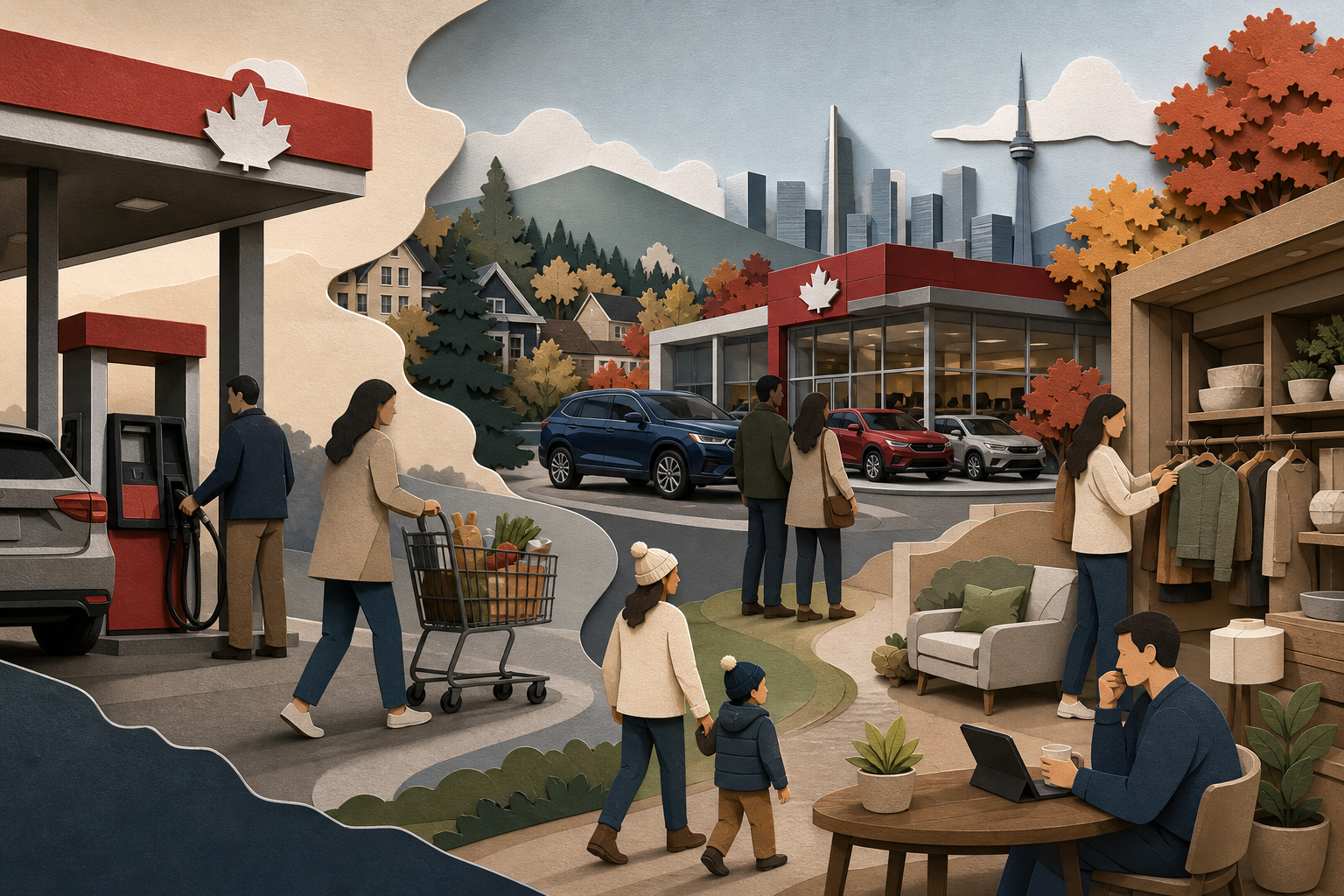
Through most of late 2025, retail "growth" was a mirage. Gasoline prices spiked, households had no choice but to pay, and the headline figures rose accordingly. That wasn't spending. It was extraction. The June shift is different because the gains are showing up in motor vehicles, home goods, and discretionary categories, sectors where people have to decide, not just comply.
What Changed Underneath the Number
The automotive sector is carrying weight again. After years of inventory shortages and sticker shock, the 2026 market has normalized into something closer to a buyer's environment. When a household commits to a car loan in this rate climate, they're signaling confidence that the next 60 months won't crater them. That's not a small psychological threshold.
Core retail sales, the measure that strips out gas stations and dealerships, are also holding. This matters because it isolates the spending that reflects actual choice. Groceries are still mandatory. A new jacket is not. The fact that mid-market clothing and home goods are seeing modest volume gains suggests that the "mortgage cliff" anxiety that dominated 2024 and early 2025 is starting to fade, even if debt-servicing costs remain elevated.
What It Means for the Recovery Narrative
The Bank of Canada's overnight rate sits around 3.75%, down from the 5.0% peak but still high by historical standards. Homeowners renewing mortgages aren't getting relief, they're getting less pain than they feared. That gap between expectation and outcome is leaking into spending behavior.
The recovery isn't a surge. It's a normalization of the relationship between income, obligation, and discretionary choice. June's 0.4% is less a victory lap than a sign that the economy has stopped contracting under its own weight. What happens next depends on whether that stability holds or whether households are simply spending down the last of their cushion before the next adjustment comes.



Statistics Canada's preliminary June data shows a 0.4% uptick in retail sales, but the number itself matters less than what's underneath it. For the first time in months, growth is coming from something other than the price of filling your tank.
Through most of late 2025, retail "growth" was a mirage. Gasoline prices spiked, households had no choice but to pay, and the headline figures rose accordingly. That wasn't spending. It was extraction. The June shift is different because the gains are showing up in motor vehicles, home goods, and discretionary categories, sectors where people have to decide, not just comply.
What Changed Underneath the Number
The automotive sector is carrying weight again. After years of inventory shortages and sticker shock, the 2026 market has normalized into something closer to a buyer's environment. When a household commits to a car loan in this rate climate, they're signaling confidence that the next 60 months won't crater them. That's not a small psychological threshold.
Core retail sales, the measure that strips out gas stations and dealerships, are also holding. This matters because it isolates the spending that reflects actual choice. Groceries are still mandatory. A new jacket is not. The fact that mid-market clothing and home goods are seeing modest volume gains suggests that the "mortgage cliff" anxiety that dominated 2024 and early 2025 is starting to fade, even if debt-servicing costs remain elevated.
What It Means for the Recovery Narrative
The Bank of Canada's overnight rate sits around 3.75%, down from the 5.0% peak but still high by historical standards. Homeowners renewing mortgages aren't getting relief, they're getting less pain than they feared. That gap between expectation and outcome is leaking into spending behavior.
The recovery isn't a surge. It's a normalization of the relationship between income, obligation, and discretionary choice. June's 0.4% is less a victory lap than a sign that the economy has stopped contracting under its own weight. What happens next depends on whether that stability holds or whether households are simply spending down the last of their cushion before the next adjustment comes.
Read Next
MCAN's 19% earnings jump proves mortgage impairments aren't the risk signal investors think they are
Toronto Buyers Can Stop Writing Love Letters, The Market Already Did the Work
25 States Sue Trump Over Tariffs, Claiming Presidential Overreach on Import Taxes
Carney's Alberta housing pitch meets canola fields and separatist flags